
Kitchen Appliance Circuit Installation
Kochs Electric installs dedicated kitchen appliance circuits that meet NEC code, pass inspection, and power your appliances safely from day one. Our experienced electricians provide quality residential and commercial wiring services for every home appliance and new appliance circuit in Indiana.
Licensed, Bonded & Insured
NEC Code Compliant
Same-Day Emergency Response
Permits Pulled & Inspections Managed
Workmanship Guarantee
Serving All of Indiana
5 Highlights on Kitchen Appliance Circuit Installation
Dedicated circuits for every major appliance
Kochs Electric installs separate 20-amp and 240-volt dedicated circuits for refrigerators, dishwashers, microwaves, ranges, ovens, and garbage disposals — each circuit breaker sized and rated to match the appliance load.
Code-compliant wiring from panel to outlet
Every kitchen appliance circuit installation follows NEC code requirements, using properly rated copper wire, AFCI breakers, GFCI outlets, and tamper-resistant receptacles where required.
Permitted and inspected work
Kochs Electric pulls the permit, schedules the code inspection, and delivers a finished installation that passes on the first visit.
Accurate load calculations
Before running a single wire, the team performs a full load calculation to confirm the main panel or subpanel can handle the added circuits without tripping breakers or creating fault conditions.
Clean rough-in and finish work
Wire routes stay concealed inside conduit or behind walls, junction boxes are properly secured, and every terminal connection is torqued to spec.
Why Choose Our Kitchen Appliance Circuit Installation
Founded by Master Electrician David Koch (Indiana License #EC21400047) and serving Indiana homeowners since 2008, Kochs Electric brings qualified, licensed electricians to every kitchen appliance circuit installation. We carry general liability and workers’ compensation insurance on every job. The team wires, connects, and terminates each circuit using copper NM cable or THHN wire rated for the specific voltage and amperage the appliance demands.
Every installation starts with a panel inspection. The electricians verify available breaker slots, check the busbar capacity, and confirm the service entrance can support the new load. If the main panel is full, Kochs Electric installs a subpanel to accommodate the additional circuits and ensure the electrical system is ready for the upgrade.
The work is permitted. Kochs Electric files for the permit before any rough-in begins and schedules the code inspection after the finish work is complete. That protects your home’s resale value and keeps your homeowner’s insurance valid.
Kochs Electric uses only quality, code-compliant materials and equipment — insulated stranded copper wire, properly rated circuit breakers, grounded electrical boxes, and listed connectors. Every wire nut, lug, and terminal gets torqued to the manufacturer’s specification.
The team also labels every circuit on the panel map after installation. You’ll know exactly which breaker feeds the range circuit, which one feeds the dishwasher circuit, and which one feeds the microwave circuit. Serving Indianapolis, Carmel, Fishers, and throughout Indiana – call (317) 680-7907 to schedule your kitchen circuit installation.
Recent jobs include a full kitchen circuit installation for an Indianapolis homeowner completing a kitchen remodel – six new dedicated circuits including a 240V 50A range circuit, two 20A small appliance circuits, and a dedicated refrigerator circuit, all permitted and inspected before the new appliances arrived; and a single dedicated microwave circuit for a Carmel homeowner whose shared circuit kept tripping the breaker when the microwave and toaster ran simultaneously, resolved with a new 20A AFCI-protected circuit from the panel.
Ready to Get Started?
Contact our licensed team today for a clear, written quote with no surprises. We serve all of Indiana.
Signs You Need Kitchen Appliance Circuit Installation
Breakers trip when you run multiple appliances:
If the circuit breaker trips every time the microwave and refrigerator run at the same time, those appliances are sharing a circuit that can’t handle the combined load. Each major kitchen appliance needs its own dedicated circuit sized to its amperage rating.
You're installing a new range or wall oven:
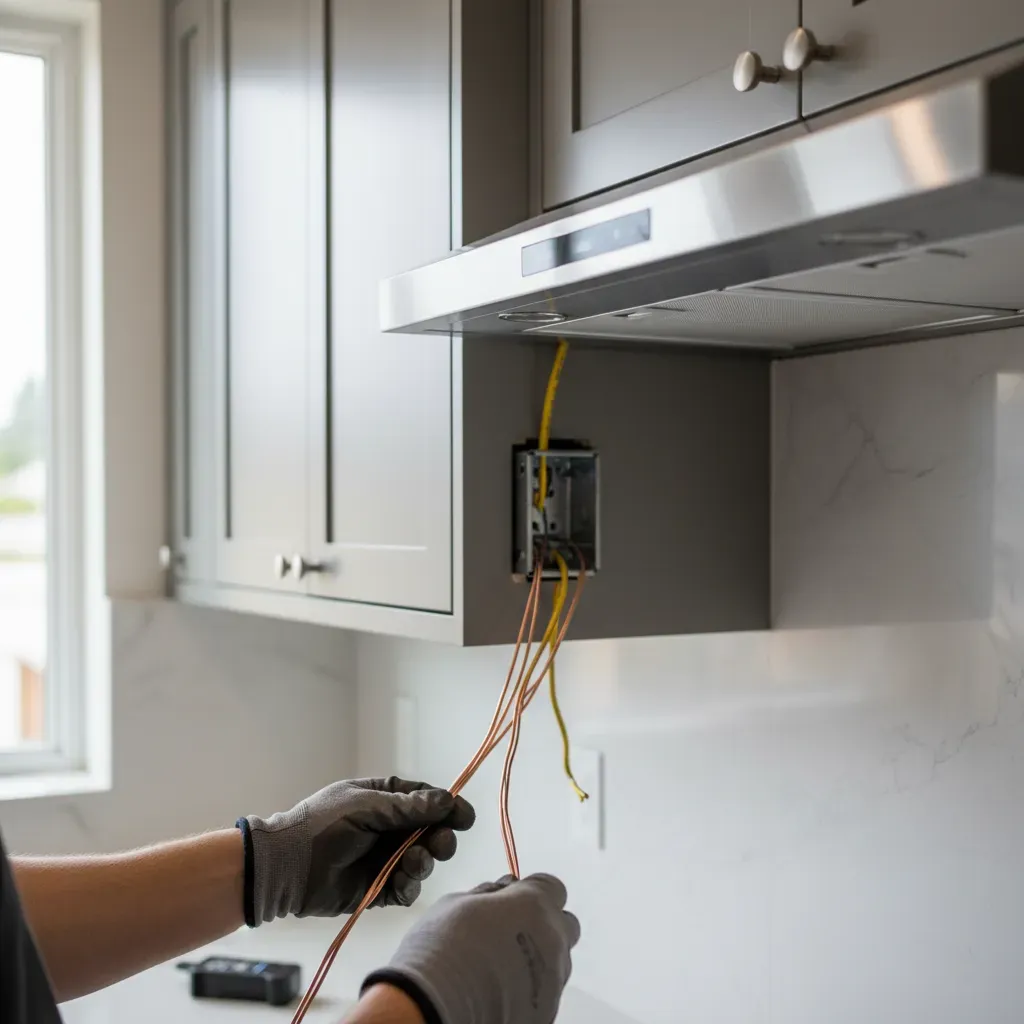
Electric ranges and wall ovens require a 240-volt circuit with a properly rated 3-wire or 4-wire connection. Running a new range circuit means pulling the correct gauge wire from the panel, installing a double-pole breaker, and terminating the hot wires, neutral wire, and ground wire at a listed range receptacle or direct connection.
Your kitchen has no GFCI protection near the sink:
NEC code requires GFCI outlets on all countertop receptacles within six feet of a kitchen sink. If your kitchen still has standard ungrounded outlets in those locations, the installation doesn’t meet current code and creates a ground-fault risk.
You're adding a garbage disposal or kitchen exhaust fan:
Both appliances need a dedicated 120-volt, 20-amp circuit with a properly grounded outlet or direct wire connection. Tapping an existing circuit overloads the breaker and creates a short-circuit risk.
Your panel shows signs of overloading:
Warm breakers, a burning smell near the panel, or frequently tripped overcurrent protection all signal that the existing circuits can’t support the kitchen load. A full load calculation and dedicated circuit installation resolves the problem before a fault or arc-flash event occurs. For homes with aging panels, a service upgrade or whole house circuit assessment may also be recommended.
State of Indiana
You don’t lift a finger
Our Kitchen Appliance Circuit Installation Process
Site assessment and load calculation
The electrician inspects the main panel, counts available breaker slots, and runs a load calculation to confirm the service entrance supports the new kitchen appliance circuits.
Permit filing
Kochs Electric submits the permit application to the city office before any work begins. No rough-in starts without an approved permit on file.
Rough-in wiring
The team drills through framing, fishes wire through walls, and routes NM cable or conduit from the panel to each appliance location. Every cable gets stapled and anchored at code-required intervals.
Panel work
The electricians install the new circuit breakers, connect the hot wire, neutral wire, and ground wire to the correct terminals, and torque every lug to spec. AFCI breakers go in where NEC code requires them.
Device installation
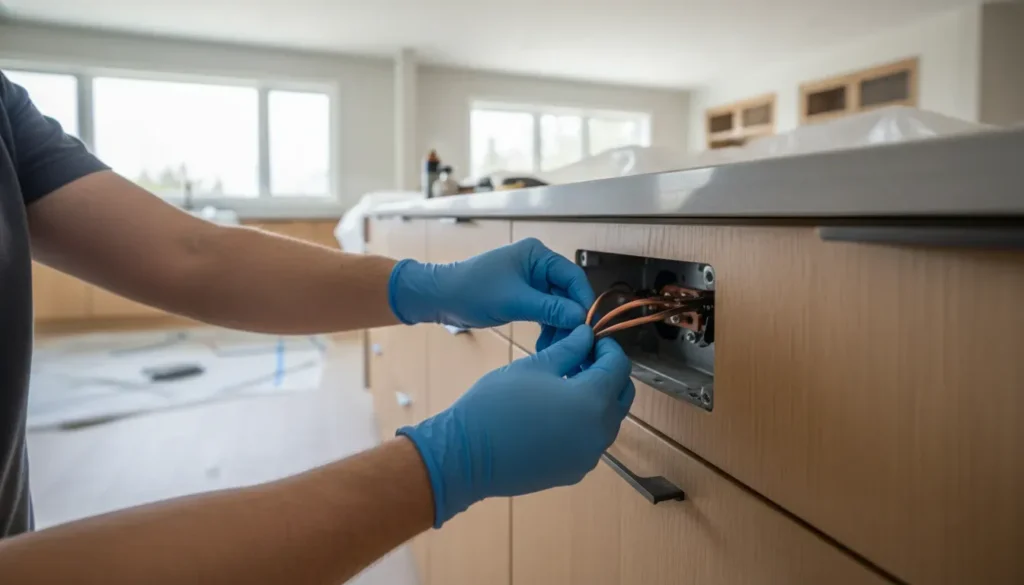
Receptacles, GFCI outlets, and junction boxes get mounted, wired, and secured. Every connection is tested with a multimeter and circuit tester before the panel is energized.
Inspection and panel labeling
The code inspector verifies the installation. After the inspection passes, Kochs Electric updates the panel map and labels every new circuit breaker.
Brands We Use
Kochs Electric installs kitchen appliance circuits using UL-listed materials from trusted manufacturers that meet NEC standards.









Every product Kochs Electric installs carries a UL listing and meets the amperage and voltage ratings required for kitchen appliance circuits.
Other Services
Kitchen appliance circuit installation
Kitchen circuit installation
Dedicated kitchen circuit wiring
Dedicated circuit for kitchen appliances
Appliance circuit wiring
20-amp kitchen circuit install
Kitchen electrical circuit installation
New kitchen circuit installation
NEC kitchen circuit requirements
240-volt kitchen circuit installation
Range circuit installation
Electric range circuit wiring
GFCI kitchen outlet installation
Kitchen outlet circuit install
Kitchen circuit breaker installation
FAQs About Kitchen Appliance Circuit Installation
What is a dedicated circuit for a kitchen appliance?
A dedicated circuit is a single circuit breaker in the panel that feeds only one appliance. The refrigerator, dishwasher, microwave, range, and garbage disposal each need their own dedicated circuit so the load from one appliance doesn’t trip the breaker for another.
How many circuits does a kitchen need?
NEC code requires at least two 20-amp small appliance circuits for countertop receptacles, plus dedicated circuits for the refrigerator, dishwasher, microwave, range or cooktop, and garbage disposal. Most full kitchen installations involve six to eight separate circuits.
What wire gauge does a kitchen appliance circuit use?
A 20-amp, 120-volt circuit uses 12-gauge copper wire. A 240-volt range or oven circuit uses 8-gauge or 6-gauge copper wire depending on the appliance’s amperage rating. The electrician confirms the correct gauge during the load calculation.
Does kitchen appliance circuit installation require a permit?
Yes. Any new circuit installation requires a permit and a code inspection. Kochs Electric handles the permit filing and schedules the inspection as part of every kitchen appliance circuit installation.
Can a kitchen appliance circuit be added to an existing panel?
In most cases, yes — if the panel has open breaker slots and the service entrance supports the added load. If the panel is full or undersized, Kochs Electric installs a subpanel to accommodate the new kitchen circuits.
How long does a kitchen appliance circuit installation take?
A single dedicated circuit typically takes two to four hours. A full kitchen with six to eight new circuits usually takes one full day, depending on the panel location and how the wire routes through the walls. Call or book online to schedule your installation at a time that works for you.
Indiana's Trusted Residential Electricians
Licensed. Insured. NEC compliant. We pull permits and schedule inspections so you don’t have to. Call us today to get started.